
In the world of fasteners, choosing the right forming process is crucial to ensuring a component’s quality, durability and cost-efficiency. At Pattberg Maschinenbauteile, we employ the two proven methods of hot forming and cold forming – each tailored to the specific requirements of your projects.
PDF, DXF, STEP, or samples
Feasibility, material, surface finish
qualified partner companies
Certified quality and environmentalmanagement
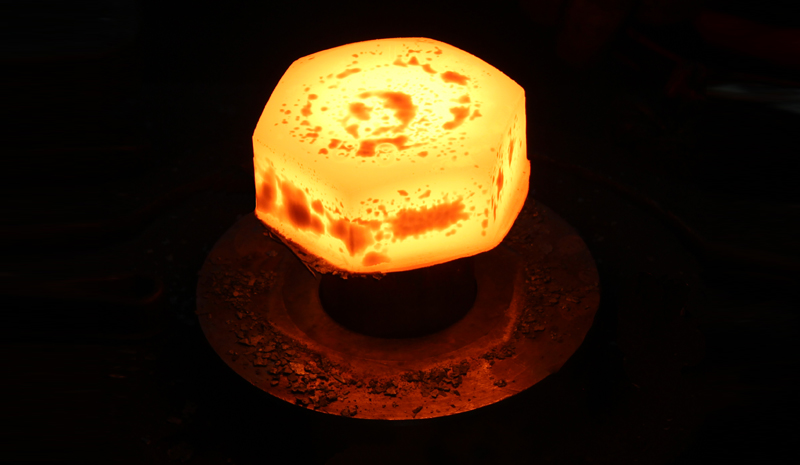
Hot forging takes place at high temperatures of 1100 to 1150 °C, making the material extremely formable. This method is ideal for components with complex shapes and high degrees of deformation. It also enables the production of larger components in medium-sized batches, for example for applications in the automotive or mechanical engineering industry. After the forging process, the blanks are often machined and subjected to quenching and tempering to ensure even higher load-bearing capacity.
Cold forging, also known as cold extrusion, takes place without heating the material and offers high dimensional accuracy and surface quality. This process is particularly suitable for the production of smaller components (<20mm) in large quantities, as it enables efficient series production.
The choice between hot and cold forging depends on the requirements of your project. While hot forging is ideal for larger components, complex geometries and medium batch sizes, cold forging is particularly suitable for precise, smaller components in high quantities.
Certified quality: PATTBERG MBT has been certified to DIN EN ISO 9001 since 2008 and, since 2024, additionally to DIN EN ISO 14001.
A few key facts are often enough for an initial assessment: operating environment, load, desired surface finish, quantity, and any existing drawing or sample. From this, it can be determined which material groups should reasonably be evaluated.
Quick technical query to PATTBERG MBT